Reducing Non-Revenue Water with Ductile Iron Pipes
Non-Revenue Water (NRW) is a major challenge for water utilities, municipalities, and water distribution authorities. It refers to water that enters the distribution system but does not generate revenue due to physical leakage, pipeline bursts, unauthorised consumption, and metering inaccuracies. Reducing non-revenue water is essential for improving operational efficiency, protecting utility revenue, and ensuring a reliable water supply.
One effective long-term strategy is upgrading ageing distribution networks with Ductile Iron (DI) pipes. Known for their mechanical strength, ductility, reliable jointing systems, and durability, DI pipelines can help reduce physical water losses when properly designed, installed, and maintained.
What Is Non-Revenue Water and Why Is It a Problem?
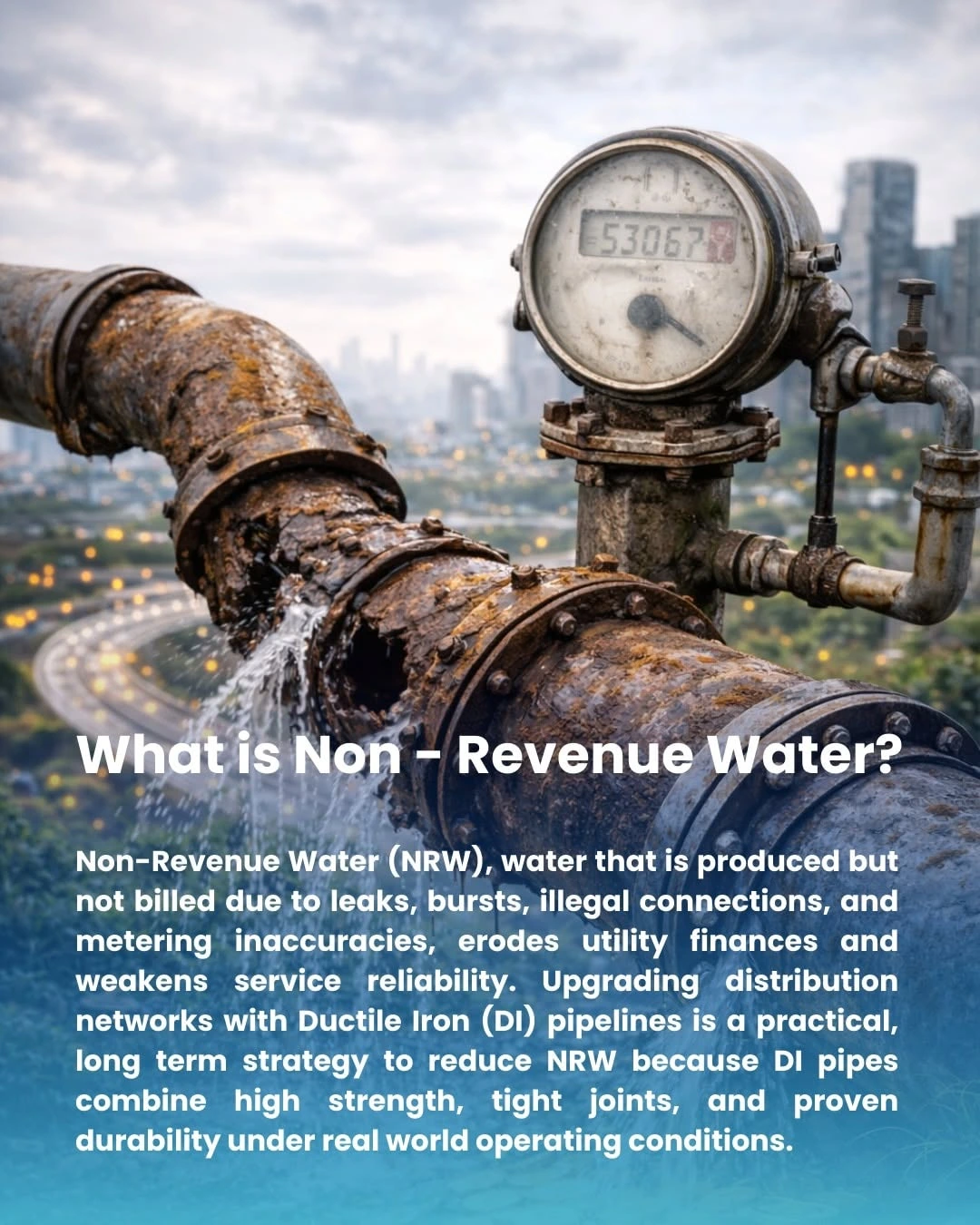
Non-Revenue Water includes water that is produced and supplied into a distribution network but is not billed to customers. It generally includes physical losses, apparent losses, and authorised unbilled consumption.
Common causes of NRW include:
Leakage from ageing or damaged pipelines
Frequent pipe bursts and joint failures
Unauthorised water connections
Inaccurate water meters
Poor pressure management
Delayed leak detection and repairs
High NRW levels can increase water treatment and pumping costs, reduce revenue, and place additional pressure on existing water resources. Therefore, utilities need reliable pipeline infrastructure alongside effective monitoring and water-loss management practices.
How Ductile Iron Pipes Help Reduce Non-Revenue Water
Ductile Iron pipes offer several advantages for water distribution systems. Their mechanical properties, jointing options, and protective coatings can help reduce physical water losses and support long-term network reliability.
1. High Strength and Resistance to Pipeline Damage
One of the key advantages of Ductile Iron pipes is their combination of strength and ductility. These properties allow appropriately specified DI pipelines to withstand demanding service conditions, including external loading and certain levels of ground movement.
Compared with more brittle pipeline materials, ductile iron can accommodate deformation before fracture, although actual performance depends on pipe design, installation quality, soil conditions, and operating pressure.
By reducing the risk of certain types of structural failure, properly installed DI pipelines can help utilities minimise leakage, avoid unexpected water loss, and improve distribution network reliability.
2. Reliable Gasketed and Restrained Joints
Pipeline joints are critical points in any water distribution network. Poorly installed or damaged joints can become sources of leakage and contribute to non-revenue water.
Modern DI pipe systems use gasketed joints to create leak-resistant connections under specified operating conditions. Where additional resistance to axial movement is required, restrained joints can help maintain pipeline integrity.
The benefits of reliable DI pipe joints include:
Reduced risk of leakage at properly installed connections
Secure connections under specified operating conditions
Greater flexibility in pipeline layout and installation
Support for stable water distribution
Potential reduction in emergency repairs and water losses
Correct joint selection, compatible fittings, proper installation, and regular inspection remain essential for achieving these benefits.
3. Effective Corrosion Protection for Longer Service Life
Corrosion can weaken pipeline components, increase maintenance requirements, and contribute to premature failures. Effective corrosion protection is therefore an important part of reducing physical water losses.
Modern Ductile Iron pipe systems can incorporate several protective measures, including:
Zinc or zinc-aluminium coatings: Help protect the external pipe surface.
Polyethylene sleeving: Provides supplementary protection in suitable soil conditions.
Internal cement mortar lining: Helps protect the internal surface and maintain hydraulic performance.
Additional protective coatings: Selected according to soil characteristics and project requirements.
The appropriate corrosion protection system depends on the environment, soil resistivity, groundwater conditions, and applicable engineering standards.
With suitable protection and maintenance, DI pipelines can deliver dependable service while helping reduce corrosion-related deterioration and the associated risk of leakage.
4. Better Management of Pressure Fluctuations
Pressure fluctuations can increase stress on pipeline networks, particularly when pumps start or stop, valves operate rapidly, or demand changes suddenly.
Properly designed Ductile Iron pipelines can provide robust mechanical performance under specified pressure conditions. However, preventing pressure-related failures also requires suitable pipe selection, hydraulic analysis, appropriate jointing, and effective surge-control measures.
Water utilities can improve network stability by combining DI pipelines with:
Pressure-reducing valves
Pressure monitoring systems
Pump control strategies
Surge protection equipment
Regular inspection and maintenance
Managing pressure effectively can help reduce the likelihood of bursts and protect the distribution network against avoidable water losses.
5. Faster Leak Detection Through Smart Water Network Management
Selecting durable pipeline materials is only one part of a successful NRW reduction strategy. Utilities must also identify leaks quickly and manage water distribution efficiently.
Ductile Iron pipeline networks can be integrated with modern water management systems, including District Metered Areas (DMAs), pressure monitoring, and acoustic leak detection.
These technologies help utilities measure water entering specific network zones, identify unusual flow patterns, and locate potential leaks.
Key approaches include:
District Metered Areas: Divide distribution networks into manageable zones for monitoring water flows.
Acoustic leak detection: Helps identify underground leaks through sound-based monitoring.
Pressure management: Reduces unnecessary stress on pipelines.
Water metering: Helps track consumption and identify unusual discrepancies.
Preventive maintenance: Supports early identification of potential failures.
Combining reliable DI pipelines with these methods allows utilities to take a more systematic approach to water-loss management.
Benefits of Reducing Non-Revenue Water with DI Pipelines
Upgrading a water distribution network with properly designed Ductile Iron pipes can support several operational improvements.
Reduced Physical Water Losses
Reliable pipe materials and well-installed joints can help reduce leakage caused by pipeline deterioration and connection failures.
Lower Maintenance Requirements
Durable pipeline systems can reduce the frequency of certain repairs, helping utilities manage maintenance resources more efficiently.
Improved Revenue Recovery
Reducing physical leakage allows a greater proportion of treated water to reach customers. However, recovering apparent losses also requires accurate metering, billing improvements, and action against unauthorised consumption.
Lower Operating Costs
Reducing water losses can help limit the energy and treatment resources wasted on water that never reaches paying customers.
More Reliable Water Supply
Fewer pipeline failures and faster leak detection can support improved continuity of supply and more dependable water distribution.
Stronger and More Resilient Infrastructure
A combination of suitable pipeline materials, effective corrosion protection, pressure management, and preventive maintenance helps utilities build water networks capable of meeting long-term service requirements.
Why DI Pipes Are a Long-Term Solution for Water Distribution
When selecting pipeline materials, utilities should evaluate more than the initial purchase price. The total lifecycle cost includes installation, maintenance, repairs, water losses, operational interruptions, and eventual replacement.
Ductile Iron pipes can offer long-term value through their mechanical strength, established jointing systems, available protective solutions, and suitability for a wide range of water distribution applications.
The final performance of any pipeline depends on proper engineering, installation, operating conditions, and ongoing maintenance. For this reason, DI pipe selection should be based on project-specific requirements rather than material properties alone.
Conclusion: Build a More Efficient Water Network with Ductile Iron Pipes
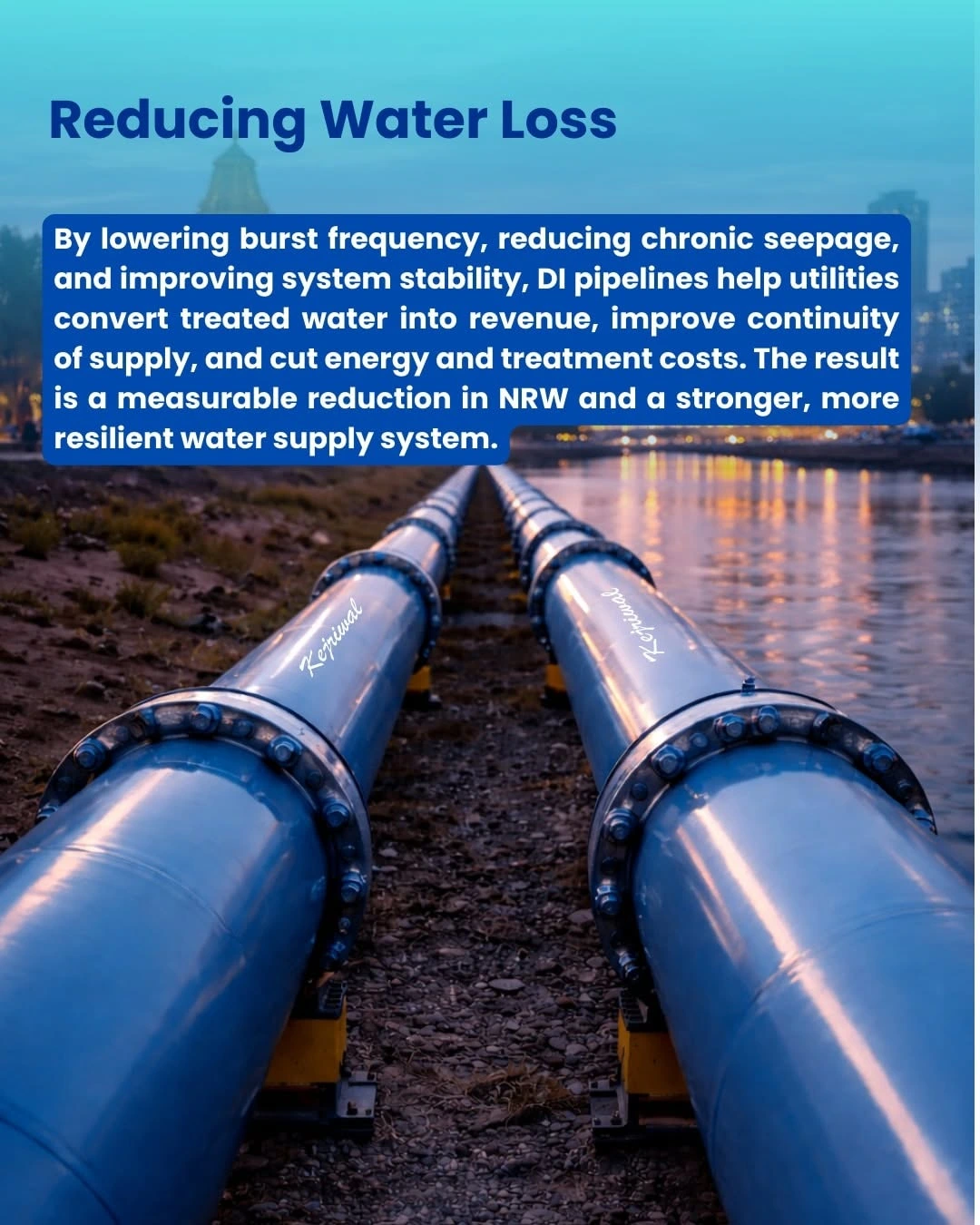
Reducing Non-Revenue Water is essential for improving utility finances, conserving treated water, and strengthening public water supply systems. Although no single material can eliminate every source of water loss, Ductile Iron pipes provide a reliable foundation for reducing physical leakage when combined with appropriate engineering and network management.
Their strength, ductility, gasketed and restrained joint options, and corrosion protection systems can help minimise certain pipeline failures and support long-term network performance.
For municipalities, water utilities, and infrastructure developers, investing in properly designed DI pipeline systems alongside pressure management, accurate metering, and effective leak detection can contribute to lower water losses and more resilient water distribution infrastructure.