
Control Valves in Water Supply
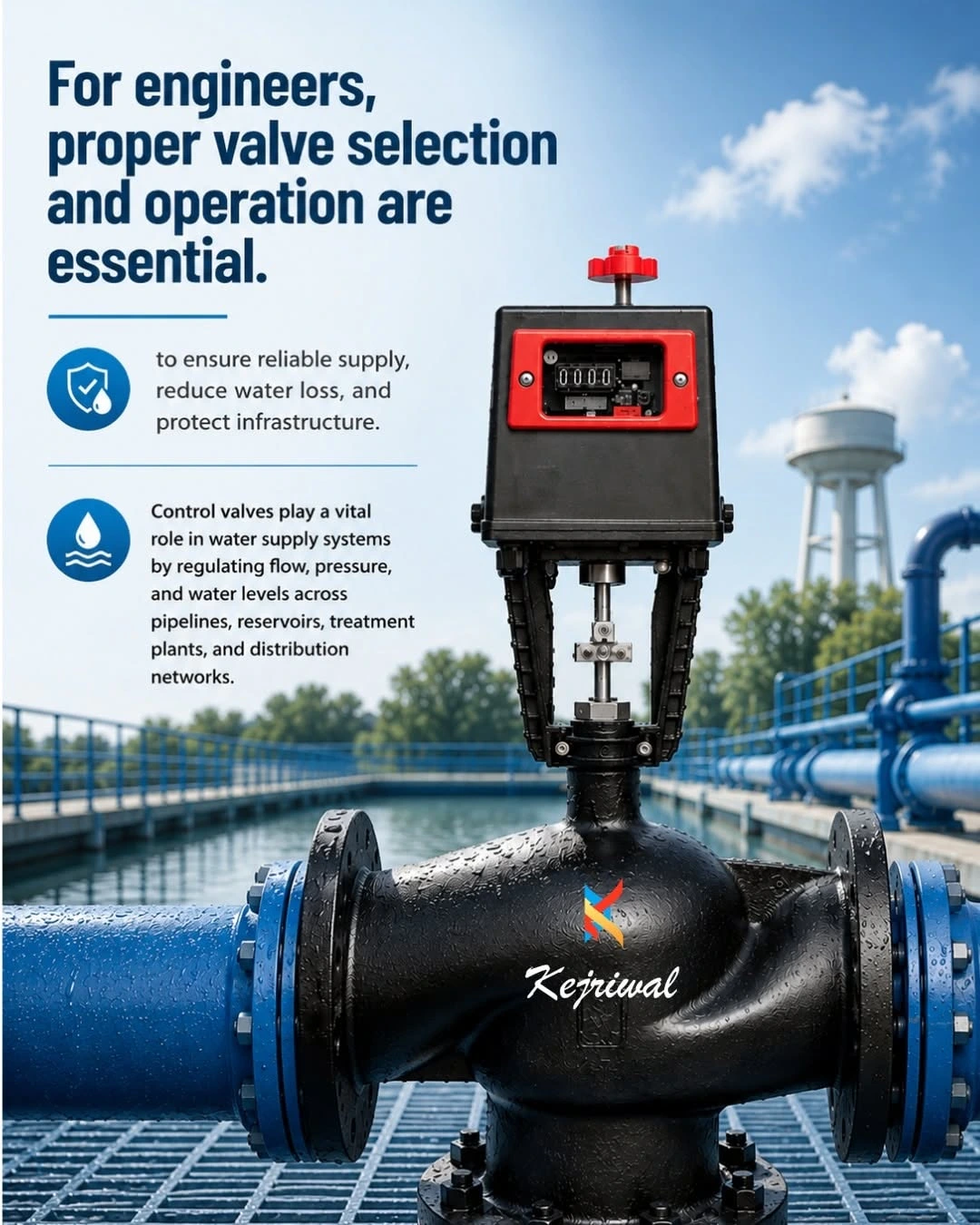
Control valves in water supply systems play a critical role in regulating water flow, maintaining pressure, and managing water levels across pipelines, reservoirs, treatment plants, and distribution networks. Selecting the right control valve is essential for improving operational efficiency, reducing leakage risks, and protecting water infrastructure.
For civil engineers, pipeline designers, consultants, and water utility professionals, understanding control valve types, valve sizing, pressure management, and water hammer prevention is important for designing reliable water distribution systems.
This guide explains the key engineering considerations for selecting, installing, and maintaining control valves in water supply applications.
1. What Are Control Valves in Water Supply Systems?
Control valves are mechanical devices used to regulate the flow, pressure, or level of water within a pipeline network. Depending on the application, they may operate automatically through hydraulic pressure or actuators, or manually through an operating mechanism.
In water supply engineering, control valves help maintain stable network conditions and ensure that water reaches different parts of the distribution system at the required pressure and flow rate.
Common applications include:
Municipal water distribution networks
Water treatment plants
Pumping stations
Reservoirs and storage tanks
Industrial water supply systems
Irrigation networks
Pressure management zones
The correct control valve depends on the system's hydraulic requirements, operating conditions, water quality, and applicable engineering standards.
2. Types of Control Valves Used in Water Supply
Different control valves perform different functions. Engineers should understand these differences before selecting a valve for a particular application.
Pressure Reducing Valve (PRV)
A pressure reducing valve maintains a lower, controlled downstream pressure when upstream pressure varies within its operating range.
PRVs are commonly used in distribution networks where excessive pressure may increase leakage, stress pipeline components, or cause service problems.
Pressure Sustaining Valve
A pressure sustaining valve helps maintain a minimum upstream pressure by restricting downstream flow when the upstream pressure falls below a specified setting.
This can be useful when protecting upstream supply requirements or managing pressure in interconnected networks.
Flow Control Valve
A flow control valve regulates water flow to help maintain a specified flow rate or limit excessive discharge under changing system conditions.
These valves can be useful in water distribution zones, treatment facilities, and other applications requiring controlled flow.
Level Control Valve
A level control valve regulates the water level in a reservoir or storage tank by controlling the inlet flow according to the required level.
Pressure Relief Valve
A pressure relief valve opens when pressure reaches a specified threshold, helping protect equipment and pipeline components against excessive pressure.
The valve type should be selected according to its intended function and the system's hydraulic design.
3. Why Pressure Control Is Important in Water Supply
Pressure management is one of the most important functions of control valves in water distribution networks.
Excessive pressure can increase leakage rates, place additional stress on pipelines, and contribute to pipe bursts. Conversely, insufficient pressure may affect consumer service and prevent water from reaching higher elevations or distant network sections.
Appropriately selected pressure control valves can help engineers maintain suitable operating conditions.
Key benefits include:
Maintaining stable downstream pressure
Reducing excessive pressure in distribution zones
Helping minimise pressure-related leakage
Protecting pipelines and connected equipment
Supporting more consistent water supply
Improving network operating efficiency
Effective pressure management should also consider pump operation, elevation changes, peak demand, minimum night flow, and transient pressure conditions.
4. Control Valve Sizing: What Engineers Should Consider
Correct control valve sizing is essential for stable and efficient operation. An oversized valve may operate poorly at low flow rates, while an undersized valve may restrict flow and create excessive pressure loss.
Engineers should evaluate the following factors when sizing a control valve.
Required Flow Rate: Determine the minimum, normal, and peak flow rates expected under different operating conditions.
Upstream and Downstream Pressure: Establish the available pressure differential across the valve throughout the expected operating range.
Pipe Diameter: Consider the connected pipeline dimensions and the valve's required flow capacity.
Operating Range: Ensure that the selected valve can regulate flow or pressure effectively during changing demand.
Water Quality: Evaluate suspended solids, sediment, and other water characteristics that may affect valve performance.
Future Expansion: Consider anticipated changes in demand and network configuration without oversizing the valve unnecessarily.
Valve sizing should follow the manufacturer's technical data and appropriate hydraulic calculations. Depending on the valve design, engineers may need to evaluate flow coefficients, cavitation potential, noise, and energy dissipation.
5. Water Hammer Prevention in Control Valve Systems
Water hammer is a transient pressure change that occurs when water velocity changes rapidly. Sudden valve closure, rapid opening, pump shutdown, or other operational events can generate pressure surges within a pipeline.
These surges may damage pipes, fittings, pumps, and valve components if they exceed the system's design limits.
To reduce water hammer risks, engineers should consider:
Selecting suitable valve closing and opening characteristics
Using slow-closing valves where appropriate
Conducting transient pressure or surge analysis
Selecting actuators with appropriate operating speeds
Evaluating air valve placement and pipeline profile
Providing surge protection equipment when required
Coordinating valve operation with pump controls
Water hammer prevention requires an assessment of the complete hydraulic system rather than relying on valve selection alone.
6. Material Selection and Corrosion Protection
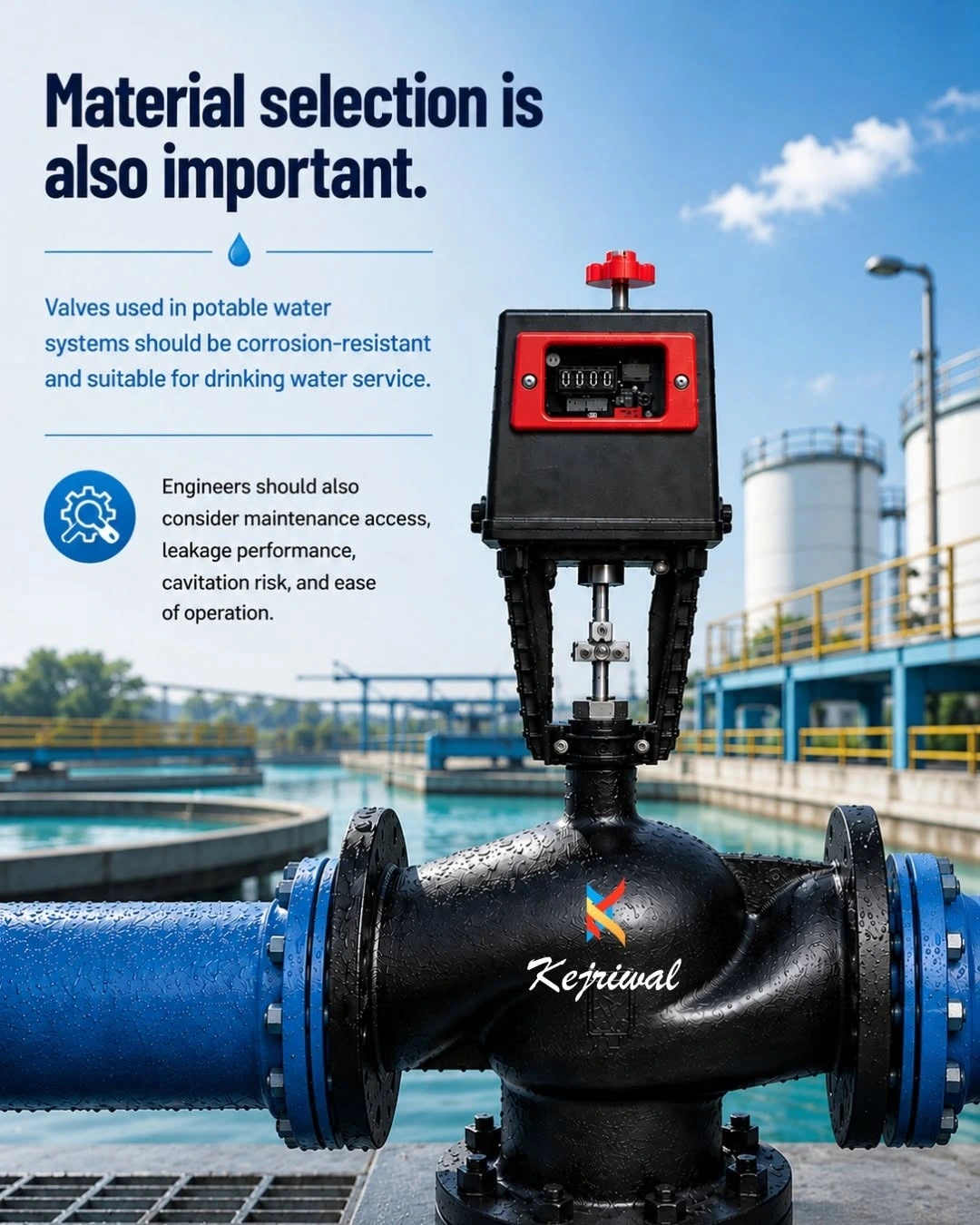
Control valves used in water supply systems must be suitable for the operating environment and water quality.
For potable water applications, materials in contact with drinking water should comply with the relevant health, safety, and regulatory requirements.
Important material considerations include:
Corrosion resistance of the valve body and internal components
Compatibility with potable water requirements
Suitability of elastomeric seals and gaskets
Resistance to wear under expected operating conditions
Compatibility with the system's pressure and temperature range
Availability of suitable protective coatings
Engineers should also consider whether the valve will operate in a buried chamber, exposed installation, water treatment facility, or industrial environment. These conditions can influence the choice of material, coating, enclosure, and maintenance approach.
7. Cavitation, Leakage and Valve Performance
Cavitation can occur when local pressure within a valve drops sufficiently for vapour bubbles to form and subsequently collapse as pressure recovers. Depending on the operating conditions, this can cause noise, vibration, erosion, and damage to valve components.
Engineers should evaluate cavitation risk when selecting control valves for applications involving significant pressure reduction.
Other performance considerations include:
Leakage Performance: Select a valve with suitable leakage characteristics for the application and verify the relevant specifications.
Operational Stability: Ensure that the valve can regulate pressure or flow without excessive hunting or oscillation.
Maintenance Access: Provide sufficient access for inspection, servicing, and replacement of components.
Actuator Selection: Match the actuator and control method to the valve's function, operating pressure, and required response.
Monitoring and Instrumentation: Consider pressure gauges, flow meters, and control instrumentation where operational monitoring is necessary.
Addressing these factors during the design stage can improve valve reliability and reduce unexpected maintenance requirements.
8. Installation and Maintenance of Water Control Valves
Even a correctly selected control valve may underperform if it is installed incorrectly or poorly maintained.
Engineers and installation teams should follow approved project specifications and the manufacturer's installation instructions.
Important practices include:
Confirming the correct valve orientation and flow direction
Ensuring that the pipeline is properly supported and aligned
Flushing the pipeline where required before commissioning
Checking pressure ratings and connection compatibility
Providing access for adjustment and maintenance
Testing valve operation under suitable conditions
Inspecting for leakage, vibration, and abnormal pressure behaviour
Following a planned maintenance schedule
The frequency of inspection and servicing should depend on the valve type, operating conditions, water quality, and manufacturer's recommendations.
9. How Control Valves Help Reduce Non-Revenue Water
Non-Revenue Water (NRW) includes water losses from leakage, unauthorised consumption, metering inaccuracies, and other sources. Pressure management is an important tool for reducing physical water losses in distribution networks.
Properly configured pressure reducing valves can help limit excessive pressure, which may reduce leakage rates and the frequency of pressure-related failures.
A comprehensive NRW reduction strategy may combine control valves with:
District Metered Areas (DMAs)
Pressure monitoring
Flow measurement
Acoustic leak detection
Accurate customer metering
Preventive pipeline maintenance
Timely leak repairs
Control valves alone cannot eliminate all sources of non-revenue water, but they can contribute significantly to an effective water loss management programme when integrated with suitable monitoring and maintenance practices.
10. Choosing the Right Control Valve for Your Water Supply Project
Selecting a control valve requires more than matching the valve diameter to the pipeline. Engineers should evaluate the valve's intended function, hydraulic performance, material compatibility, maintenance requirements, and long-term operating costs.
Before finalising a selection, consider:
Required pressure or flow control function
Minimum and maximum flow rates
Normal and transient operating pressures
Pipe diameter and connection type
Water quality and corrosion risks
Cavitation and noise potential
Actuation and control requirements
Installation space and maintenance access
Applicable technical standards
Total lifecycle cost
A properly selected control valve can help improve water distribution efficiency, protect infrastructure, and support reliable system operation.
Conclusion
Control valves are essential components of modern water supply systems. From pressure reducing valves and flow control valves to pressure sustaining and level control valves, each type performs a specific function in managing water distribution.
For engineers, the key to reliable performance lies in correct valve sizing, suitable material selection, effective pressure management, water hammer prevention, and regular maintenance.
By integrating appropriately selected control valves with sound hydraulic design and effective network monitoring, water utilities can improve supply reliability, manage leakage risks, and support more efficient and resilient water distribution infrastructure.